Jasprit Bumrah Absence as India Secures Victory Despite Key Players Missing
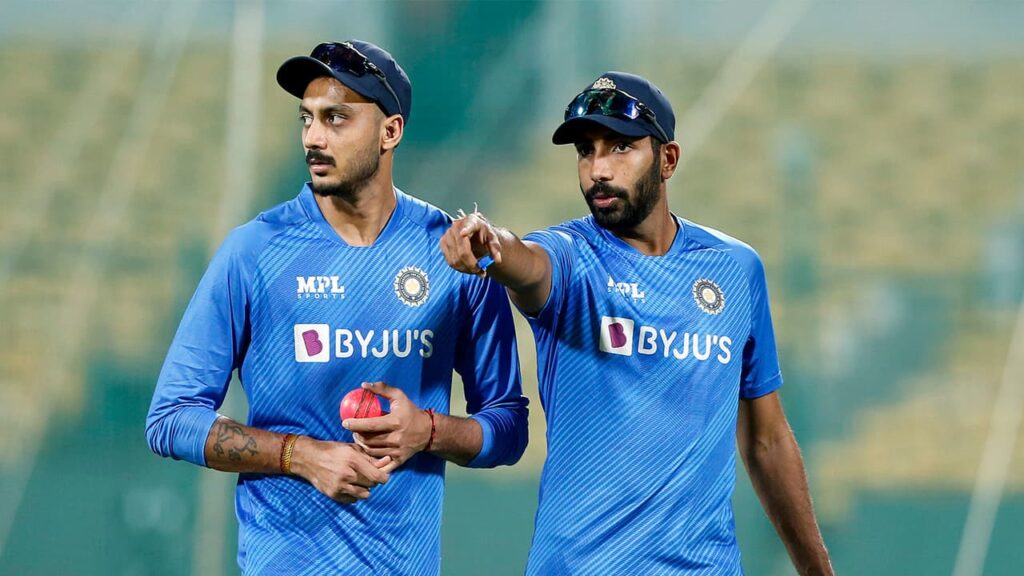
In the third T20I match held in Dharamsala, India’s squad was without two key players: fast bowler Jasprit Bumrah, who was unavailable due to personal reasons, and all-rounder Axar Patel, who was unwell. Despite these absences, India delivered a composed performance to defeat South Africa by seven wickets, sealing the chase with 25 balls to spare and taking a decisive lead in the series.
The result highlighted India’s growing depth in T20I cricket, demonstrating their ability to adapt swiftly even when senior players are unavailable. Conditions at Dharamsala, with early movement and dew later in the evening, played a role in shaping team strategies and execution.
Jasprit Bumrah Absence Forces Squad Changes and Tactical Impact
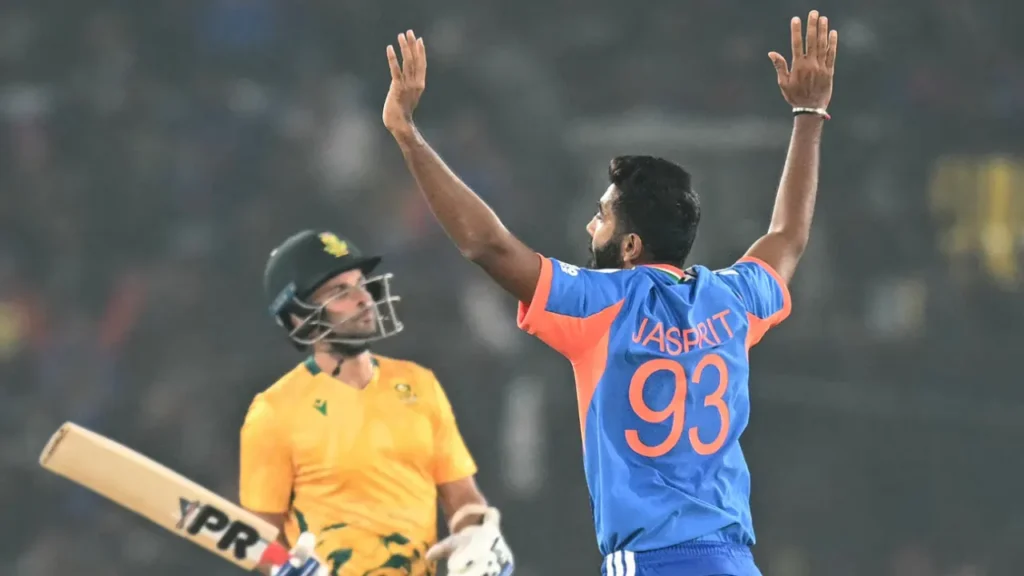
Jasprit Bumrah’s unforeseen absence opened up an opportunity for Harshit Rana, known for his lower-order batting ability, to enter the playing XI. This adjustment also allowed India’s mystery spinner Varun Chakravarthy to operate alongside Kuldeep Yadav, strengthening the spin options available to the captain.
On the South African side, several changes were made following their series-equalizing win in New Chandigarh. Anrich Nortje, Tristan Stubbs, and Corbin Bosch were brought in, replacing David Miller, Lutho Sipamla, and George Linde. Aiden Markram and Donovan Ferreira took on the responsibility of spin bowling duties for the visitors.
These lineup shifts reflected both teams’ attempts to balance conditions, form, and workload management in a closely fought India vs South Africa T20I series.
Jasprit Bumrah Context as Match Line-ups and Performances Unfold
India’s playing XI featured a blend of experience and youth, with Suryakumar Yadav leading the side as captain. Support came from established names such as Hardik Pandya and emerging batters like Shubman Gill, providing stability and flexibility to the lineup.
Opting to field first, India took advantage of the dewy conditions later expected in the evening. The bowling unit responded impressively, applying pressure from the outset and restricting South Africa to a modest total of 117 runs.
South Africa, captained by Aiden Markram, relied on seasoned campaigners including Quinton de Kock and Reeza Hendricks. However, consistent pressure from India’s bowlers prevented any meaningful partnerships from developing.
Jasprit Bumrah’s Absence Highlights Arshdeep Singh’s Leadership with the Ball
With Bumrah unavailable, responsibility fell on Arshdeep Singh to lead the pace attack, and he responded with control and discipline. Supported well by Varun Chakravarthy and Kuldeep Yadav, India maintained tight lines and lengths, forcing South African batters into risky shot selection.
The bowling performance underscored India’s ability to operate effectively even without their spearhead, reinforcing confidence in the bench strength ahead of future international assignments.
Jasprit Bumrah Watch as India’s Chase Proceeds Calmly
Chasing a relatively low target, India approached the innings with patience rather than urgency. The top order focused on minimizing risk, rotating strike efficiently, and capitalizing on loose deliveries.
The chase progressed smoothly, with India rarely appearing under pressure. Their calm approach reflected tactical clarity and experience, ensuring the target was achieved comfortably and without unnecessary loss of wickets.
Jasprit Bumrah Factor in Series Outlook Going Forward
With this victory, India now hold the advantage in the T20I series, underlining their adaptability in challenging situations. The management will be keen to see Jasprit Bumrah and Axar Patel return to full fitness as the series progresses, restoring balance and experience to the squad.
For South Africa, reassessment will be crucial. Adjustments in batting approach and bowling discipline may be required to counter India’s depth and flexibility in the remaining fixtures.

Jasprit Bumrah Absence Emphasizes Importance of Squad Depth in T20I Cricket
This encounter served as a reminder of the importance of squad depth in modern T20I cricket. Unexpected absences are inevitable across long tours, and teams that adapt quickly often gain the upper hand.
India’s ability to reorganize their playing XI, redistribute responsibilities, and execute plans effectively without key players reflects strong team culture and preparation.
Jasprit Bumrah and India’s Strategic Readiness Moving Ahead
As the series continues, attention will remain on Bumrah’s availability and the balance of India’s bowling attack. His return would further strengthen a unit already performing efficiently under varied conditions.
Regardless of selection changes, India’s performance in Dharamsala demonstrated that strategic planning and adaptability remain central to success at the international level.
This year’s IPL has seen unpredictable outcomes—some of which were already highlighted in VIPJEE’s match previews.
For complete coverage and updates from the third T20I between India and South Africa in Dharamsala, visit ESPNcricinfo.