Key insights
1. Each team plays 14 league matches. Points system:
- Win: 2 points
- No result/abandoned: 1 point each
- Loss: 0 points
- Ties normally go to a Super Over to decide the winner (2 points / 0 points).
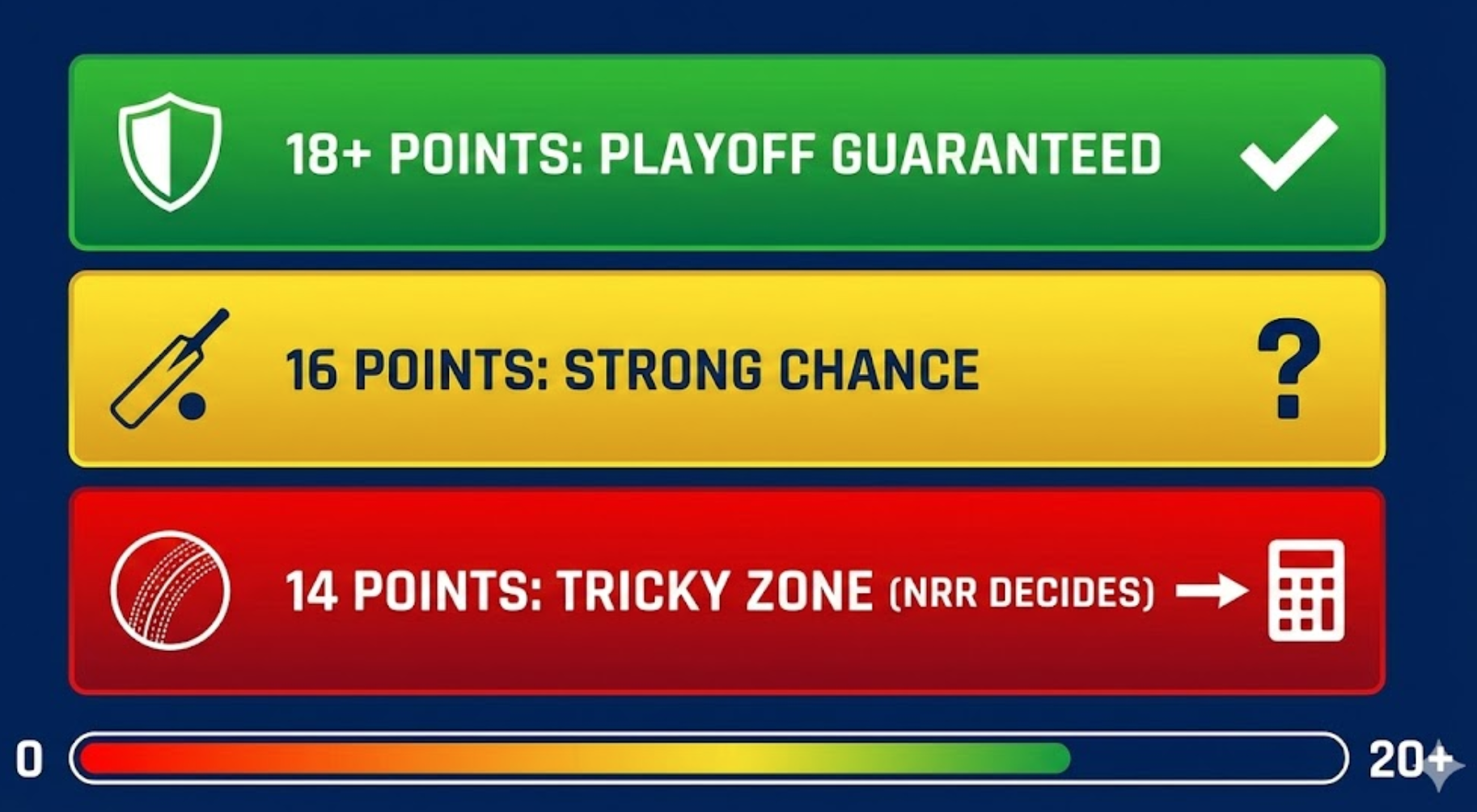
2. Playoff benchmarks:
- 18+ points → almost guaranteed to qualify
- 16 points → strong chance
- 14 points → possible, but depends on Net Run Rate (NRR) and other results.
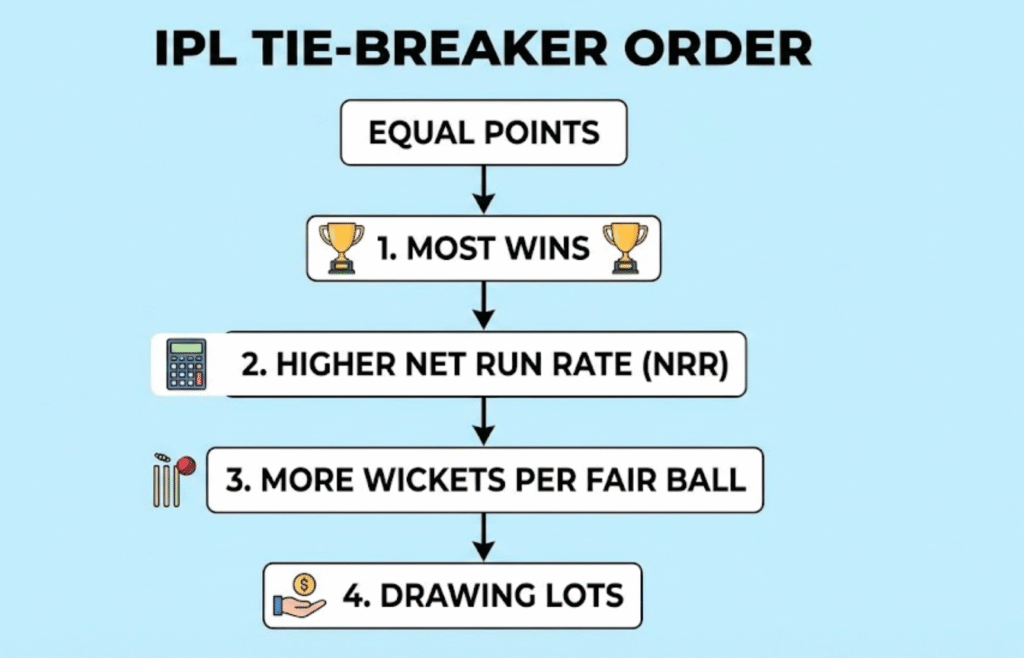
3. When teams finish on equal points, ranking is decided in this order:
- Most wins
- Higher NRR
- More wickets taken per fair balls bowled
- Drawing lots (last resort)
4. NRR, like goal difference in football, is the key tie-breaker and a big reason teams keep pushing for big winning margins late in the league.
The Indian Premier League (IPL) points table is basically the scoreboard for the whole season. It shows how well each team is doing and, for bettors, it’s a quick way to judge a team’s real championship chances.
It’s not just “wins and losses” either. The system is built to reward teams that win more and win better, with things like Net Run Rate (NRR) deciding tight races. So understanding the IPL points table rules is super important once the league reaches the business end.
This guide walks through:
- How points are given
- How many points you usually need to reach the playoffs
- What happens when teams are tied (tie-breaker rules, especially NRR)
The Core Basics: How Points Are Given
Each team plays 14 league matches, and their place on the table mainly depends on how many points they’ve earned. The whole system is set up to encourage teams to go for wins.
Points for Wins, Ties, and No Results
Here’s the simple breakdown:
| Match Outcome | Points Awarded |
| Win | 2 points |
| Tie (decided by Super Over) | 2 points (winner) / 0 points (loser) |
| Match Abandoned / No Result | 1 point each team |
| Loss | 0 points |
A key detail from the IPL rules:
- If a match ends level after both innings, it goes to a Super Over so there’s a clear winner who gets the full 2 points.
- The only time teams share 1 point each in a tied situation is when something like bad weather stops the Super Over from being played or finished. Then the game is officially a “No Result”.
How Many Points Do You Need to Reach the Playoffs?
If you’re tracking who might make the top four, some “magic numbers” are useful:
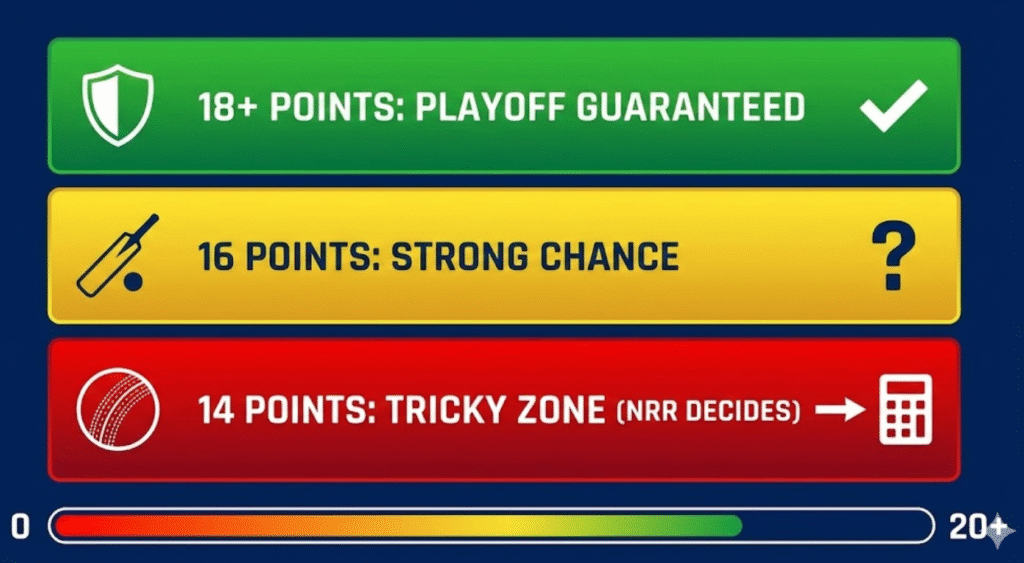
- 16 points (8 wins):
This is the usual benchmark. Teams that hit 16 points normally have a strong chance to qualify. - 18+ points:
Teams with 18 or more points are almost always safe and considered virtually guaranteed a playoff spot. - 14 points (7 wins):
Teams can still make the playoffs with 14 points, but it’s tricky. Their fate depends on:
- Having a better Net Run Rate (NRR) than other teams on 14 points
- Other match results going their way
- Having a better Net Run Rate (NRR) than other teams on 14 points
So, towards the end of the league, you’ll often see teams not just trying to win, but trying to win big to boost their NRR.
Tie-Breakers: What If Teams Have the Same Points?
When two or more teams finish on the same number of points, the IPL doesn’t just flip a coin. It uses a clear tie-breaker order to decide who ranks higher.
The Official IPL Tie-Breaker Order
The ranking is decided in this order:
- Total Points
– First and most important. - Most Wins
– Among teams on the same points, the team with more wins in the league stage ranks higher. - Higher Net Run Rate (NRR)
– If points and wins are the same, the team with the better NRR goes ahead.
This ordering is important:
The rules say that NRR comes right after “Most Wins”, so standings reflect a team’s overall performance across the season, not just head-to-head results.
If It’s Still Level: Advanced Tie-Breakers
In the rare case where teams are still tied after Points, Wins, and NRR, the rules go even deeper:
- More Wickets Taken per Fair Balls Bowled
– The team that has taken more wickets per legal delivery (in matches that had results) ranks higher. - Drawing Lots
– If everything is still equal after all that, then it literally comes down to drawing lots as a last resort.
Net Run Rate (NRR): The Key Tie-Breaker
Net Run Rate (NRR) is the main tie-breaker in the IPL standings, and it works a bit like goal difference in football leagues.
- A positive NRR means a team scores faster, on average, than its opponents.
- A negative NRR means they’ve been outscored overall.
Because NRR decides who finishes above whom when teams are tied on points, it’s a huge factor late in the season, and a key metric for people doing analytical betting.
Read more: How Net Run Rate is Calculated in IPL?
Conclusion: Why These Rules Matter
The IPL points table rules create a competition that rewards:
- Winning matches (2 points or nothing)
- Consistency over 14 games
- Efficiency, via Net Run Rate, when teams are tied
Understanding:
- How points are awarded,
- The usual playoff benchmarks (14, 16, 18 points), and
- The tie-breaker order (Points → Most Wins → NRR → wickets taken → drawing lots)
gives you a real edge when you’re trying to predict which teams will squeeze into the top four and how the table might shuffle in the final weeks.
Q1: How many points are needed to qualify for the IPL Playoffs?
A team must aim for 16 points (8 wins) to have a strong chance of qualifying for the playoffs. Achieving 18 points or more is considered virtual assurance of qualification. Teams with 14 points can still qualify, but their chances depend heavily on securing a superior Net Run Rate (NRR).
Q2: What is the official order of tie-breakers if teams finish on equal points?
If teams have the same number of points, the IPL points table rules follow this strict hierarchy:
1. Most Wins achieved during the league stage.
2. Higher Net Run Rate (NRR).
3. Higher number of wickets taken per fair balls bowled.
4. Drawing lots (if still equal).
The NRR is prioritized over the Head-to-Head record between the tied teams in official standings.